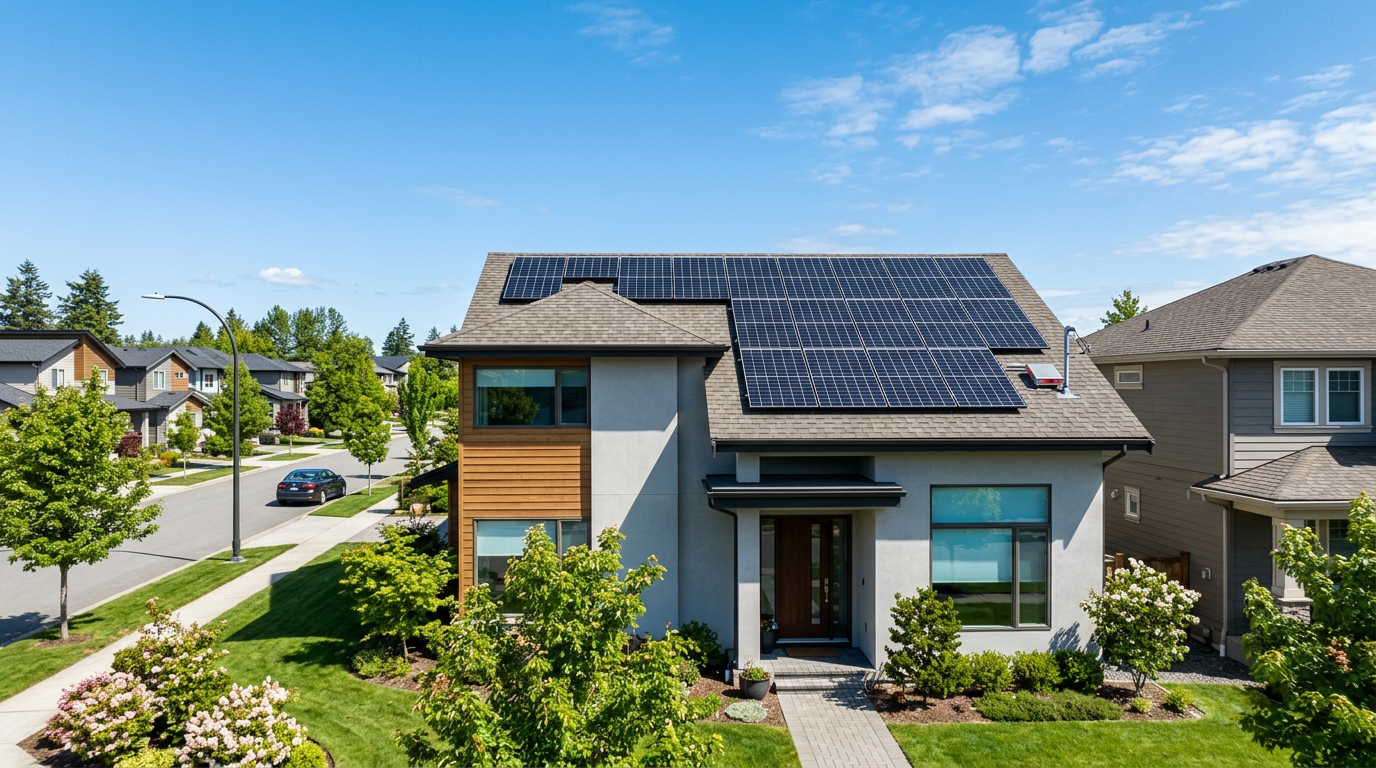
Shopping for home solar can feel straightforward until the quotes start arriving. Two proposals may both promise a lower electric bill, but the details behind the numbers can be very different. If you want to avoid confusion, the most useful skill is learning how to read a solar quote line by line.
A good quote should help you answer a few simple questions: What exactly am I buying? How much will it cost? How will it be financed? And who is responsible if something goes wrong later? Here’s how to compare your options with a calmer, more informed eye.
Start with the system size and equipment
The first thing to check is the size of the proposed system, usually listed in kilowatts, or kW. That number tells you the system’s peak output, but it does not tell the whole story. A larger system is not automatically better; it should match your home’s energy use, roof space, and local sunlight conditions.
Look closely at the equipment list:
- Solar panels: Note the brand and model, not just the panel count.
- Inverters: These convert solar power into usable household electricity. Some quotes use one central inverter, while others use microinverters or power optimizers.
- Battery storage: If included, check whether the battery is part of the core quote or an add-on.
- Monitoring system: Ask whether app-based monitoring is included and whether there are fees.
Names matter here because quality, warranty terms, and compatibility can vary by manufacturer. If a quote does not clearly identify the equipment, ask for a revised version in writing.
Understand what the price actually includes
Solar quotes can look simple on the surface, but the price may bundle together several different costs. Before comparing offers, find out whether each one includes permitting, engineering, labor, racking, wiring, tax documentation, roof work, and cleanup.
Also ask what is excluded. A proposal may leave out items such as:
- Roof repairs or roof replacement
- Upgrades to the electrical panel
- Trenching for ground-mounted systems
- Utility interconnection fees
- Building permits or inspection-related changes
These extras are not necessarily red flags. In many cases, they are normal project costs that depend on your home. The issue is not whether they exist; it is whether you know about them before you sign.
Tip: When two quotes have very different prices, check whether they include the same equipment, labor, and add-on work. A lower number is not helpful if it leaves out major project costs.
Compare financing terms, not just monthly payments
Many homeowners focus on the monthly payment first. That makes sense, but it can also hide important differences. A lease, power purchase agreement, cash purchase, or solar loan each works differently, and loan terms can vary widely from one installer to another.
If you are considering financing, ask for the following:
- Interest rate and whether it can change over time
- Loan term and total repayment period
- Any dealer fees or origination fees
- Prepayment penalties or restrictions
- Whether the lender requires a lien
For leases and power purchase agreements, look carefully at who owns the system, how payments may change, and what happens if you sell the home. In some cases, ownership stays with the provider, which may simplify maintenance but can also limit your control. In other cases, buying the system may offer more flexibility. There is no universal best choice; the right fit depends on your goals and comfort level.
Read the production estimate with healthy skepticism
Most solar quotes include an estimate of how much electricity the system may generate. That estimate is useful, but it should be treated as a projection, not a promise. Production depends on roof angle, shading, weather patterns, system orientation, and future energy use.
When reviewing output estimates, ask how the installer calculated them. Good proposals usually reference local sun data, shading analysis, and assumptions about system losses. If one quote projects much more production than the others, ask why. A more aggressive estimate is not necessarily wrong, but it deserves a closer look.
It also helps to compare the production estimate against your recent utility bills. If you have a home that uses very little electricity, a large system may not make sense. If your usage is high because of electric heat, EV charging, or a growing family, the installer should explain how the quote was sized to match that demand.
Review warranties, maintenance, and company support
Solar is a long-term purchase, so the service terms matter almost as much as the hardware. Your quote should spell out who backs the panels, inverter, battery, and installation work.
Look for clarity on these points:
- Equipment warranty: Usually provided by the manufacturer
- Workmanship warranty: Covers installation-related issues
- Performance warranty: May address panel output over time
- Service process: How you request repairs or troubleshooting
- Transferability: Whether warranties can move to a new homeowner if you sell
Also ask whether routine maintenance is expected and who handles it. Most solar systems are not high-maintenance, but they are not maintenance-free. You should know what is covered, what is not, and how quickly the company typically responds to service requests.
Use the same checklist for every quote
The easiest way to compare proposals is to put them side by side using the same questions. That helps you focus on the real differences instead of getting distracted by sales language or glossy presentation.
- What equipment is included, and what are the exact brands and models?
- What is the total cost, and what fees or extras are not included?
- What financing option is being offered, and what are the full terms?
- How was the production estimate calculated?
- What warranties and service commitments come with the system?
- Who handles permits, inspections, and utility approvals?
If a company will not answer these questions clearly, that is useful information too. A reputable installer should be able to explain its proposal in plain language and provide revised paperwork when needed.
The bottom line
Reading a solar quote carefully takes a little time, but it can save you from signing up for equipment, pricing, or financing that does not match your needs. Focus on the details that affect long-term value: equipment quality, included costs, financing terms, production assumptions, and service support.
If you are still comparing installers, keep your questions consistent and ask each company to explain the same set of terms. A careful side-by-side review is the best way to choose a solar offer that fits your home and your budget.
Free Tools & Calculators
Savings Growth Calculator
Project what regular deposits could grow to with compound interest.
Estimates only, for general information — not financial or medical advice.
Personal Loan Calculator
Estimate the monthly payment and interest on a personal loan.
Estimates only, for general information — not financial or medical advice.