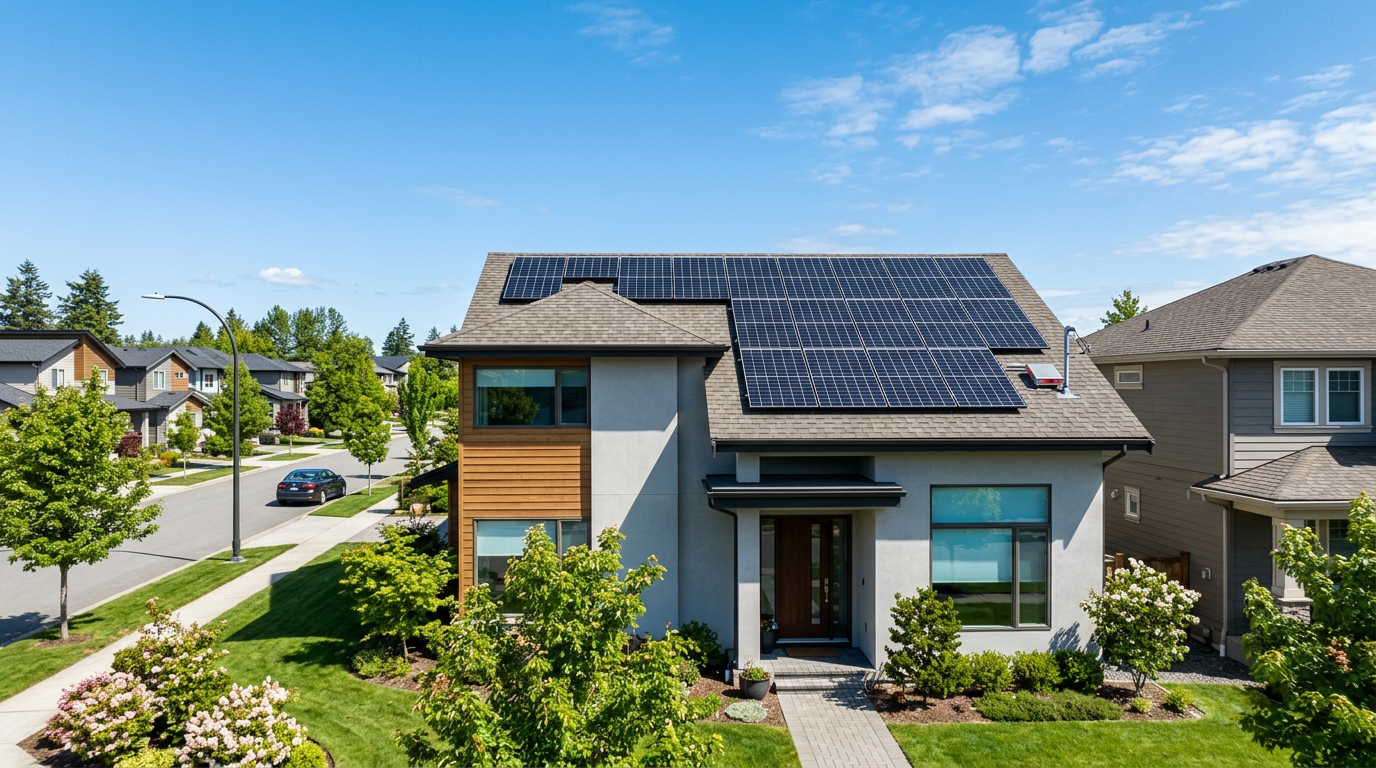
If you’re shopping for a home solar battery, the first question is usually not which brand is best. It’s how much battery you actually need. A system that’s too small may run out quickly during an outage, while one that’s oversized can add cost and complexity you don’t need.
The right answer depends on what you want to keep running, for how long, and whether the battery will work with solar panels, a generator, or both. Here’s a practical way to think it through before you get quotes.
Start with the loads you actually want to back up
Not every outage plan needs to power the whole house. In many homes, the smarter approach is to identify critical loads—the essentials that matter most during an outage.
Common critical loads include:
- Refrigerator and freezer
- Lights in key rooms
- Internet modem and Wi-Fi router
- Phone chargers and small electronics
- Medical equipment, if applicable
- Sump pump or well pump, when needed
Loads that often use too much battery power for routine backup include electric ovens, central air conditioning, and electric resistance heat. That does not mean they are impossible to back up, but they raise the battery and inverter requirements quickly.
Estimate how long you want backup power to last
Battery size is usually discussed in kilowatt-hours, or kWh. A battery with more kWh can generally supply your home for longer. To make the number useful, think in terms of hours of coverage rather than just capacity.
A simple planning approach is:
- List the appliances and devices you want to run.
- Estimate how many watts each one uses.
- Add the running watts together.
- Multiply by the hours you want backup power.
That gives you a rough energy need. Real-world batteries are not usually available for every last watt-hour on the label, so it is wise to leave a margin. Depth of discharge, inverter losses, and the way your home cycles appliances can all affect usable runtime.
Tip: If your goal is “overnight backup,” ask installers how the battery performs across a typical evening, not just in theory.
Check the inverter and surge requirements
A battery’s storage capacity is only part of the equation. You also need an inverter that can handle the power your appliances demand at any given moment. This is measured in kilowatts, or kW, and it matters especially when motors start up.
For example, a refrigerator may draw much more power for a few seconds when its compressor kicks on. A well pump, microwave, or air conditioner can also create short surge demands. If the inverter is undersized, the battery may be full but still unable to start the appliance.
When comparing systems, ask about:
- Continuous output: how much power the inverter can supply steadily
- Surge output: how much extra power it can handle briefly
- Stacking or expansion: whether multiple batteries or inverters can be added later
- Critical loads subpanel: whether only selected circuits will be backed up
This is one reason two batteries with the same kWh rating may perform differently in your home. Capacity and output need to match your actual equipment.
Decide whether you need partial-home or whole-home backup
Some households are best served by a battery that keeps a few essential circuits running. Others want a system that can support most or all of the house, at least for a limited time. The choice affects battery size, inverter design, and installation cost.
Partial-home backup
This is usually the more efficient option for families who mainly want refrigeration, lighting, internet, and a few outlets during outages. It can be simpler to install and easier to size because you are not trying to cover every load at once.
Whole-home backup
Whole-home backup is more convenient, but it demands more from the system. If you plan to run large appliances or HVAC equipment, you may need multiple batteries, a more capable inverter, and careful load management. Some homes also require electrical panel upgrades.
The right answer is not always the biggest system. It is the one that matches your priorities, your electrical setup, and how long outages usually last where you live.
Factor in solar panels, local outages, and installation details
If your battery will pair with rooftop solar, you can often recharge during the day while also using the home. That can make a smaller battery more practical than it would be on backup power alone. But solar charging does not remove the need to size carefully, especially during cloudy weather or long outages.
You should also think about:
- Outage pattern: frequent short outages vs. rare multi-day events
- Sunlight availability: how much solar recharge you can realistically expect
- Utility rules: whether net metering or interconnection affects your setup
- Indoor vs. outdoor placement: temperature, space, and code requirements
- Future needs: EV charging, a heat pump, or an addition to the home
Installation quality matters as much as equipment choice. Ask whether the installer will evaluate your main panel, backup subpanel, grounding, permitting, and any utility approvals that may be required. A good system should be designed for safe operation, not just maximum storage on paper.
Questions to ask before you compare quotes
Before you choose a battery, it helps to ask each installer the same set of questions so you can compare options fairly.
- Which loads will be backed up, and which will not?
- How long should this system run under a typical outage scenario?
- What is the battery’s usable capacity, not just the nameplate size?
- What inverter output do I need for startup surges?
- Can the system be expanded later if my needs change?
- Will the battery recharge from solar during an outage?
- Are any panel, wiring, or permitting upgrades likely?
It is also worth asking how the system behaves if you use more power than expected. Some batteries shed loads automatically, while others require manual management. Knowing that in advance can prevent surprises when the power goes out.
The bottom line
To size a solar battery well, start with the loads you care about, the hours you want to cover, and the power your appliances need to start and run. Then confirm that the inverter, backup panel, and installation plan all fit those goals.
If you’re still deciding, the best next step is to compare a few battery and installer options side by side. That makes it easier to see which systems are built for your home today—and which ones leave room to grow later.
Free Tools & Calculators
Savings Growth Calculator
Project what regular deposits could grow to with compound interest.
Estimates only, for general information — not financial or medical advice.
Personal Loan Calculator
Estimate the monthly payment and interest on a personal loan.
Estimates only, for general information — not financial or medical advice.