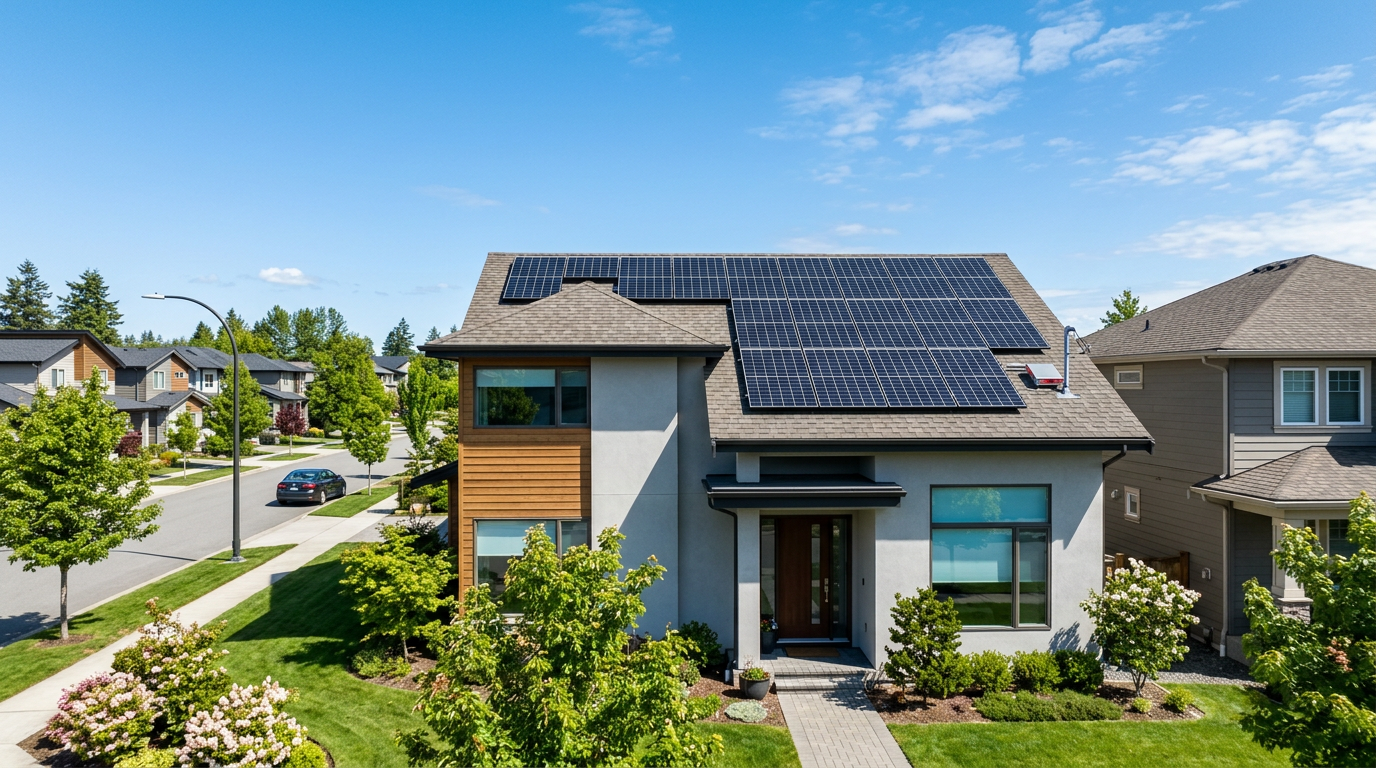
HOOK
Your solar panels might not wipe out your electric bill — even if your system is sized right. Why? Because the rules for selling power back to the grid can change how much you actually save.
[B-roll: rooftop solar panels, utility bill, close-up of a meter spinning backward]
KEY POINT 1
The first thing to check is net metering, or whatever version your utility uses. Full retail credit means you get paid close to what you pay for electricity. Lower buyback rates mean your extra power is worth less.
[B-roll: simple on-screen graphic showing “1 kWh used” vs. “1 kWh exported”]
KEY POINT 2
Next, look at when your home uses the most power. Solar helps most when your daytime production matches your daytime usage. If you’re out all day, you may export more power for less credit.
[B-roll: daytime home exterior, appliances running, clock graphic, sun overhead]
KEY POINT 3
Also watch for fixed charges and minimum bills. Some utilities add monthly fees that solar can’t erase. So even with a good system, your bill may still have a small base amount.
[B-roll: electric bill line items highlighted, calculator, utility logo blurred]
CTA
Before you buy solar, ask for a savings estimate based on your utility’s current rules — not last year’s. If you want more smart energy tips, follow along and learn what to check before you sign.
[B-roll: homeowner reviewing solar proposal, text on screen: “Check buyback rates first”]
Free Tools & Calculators
Savings Growth Calculator
Project what regular deposits could grow to with compound interest.
Estimates only, for general information — not financial or medical advice.
Personal Loan Calculator
Estimate the monthly payment and interest on a personal loan.
Estimates only, for general information — not financial or medical advice.