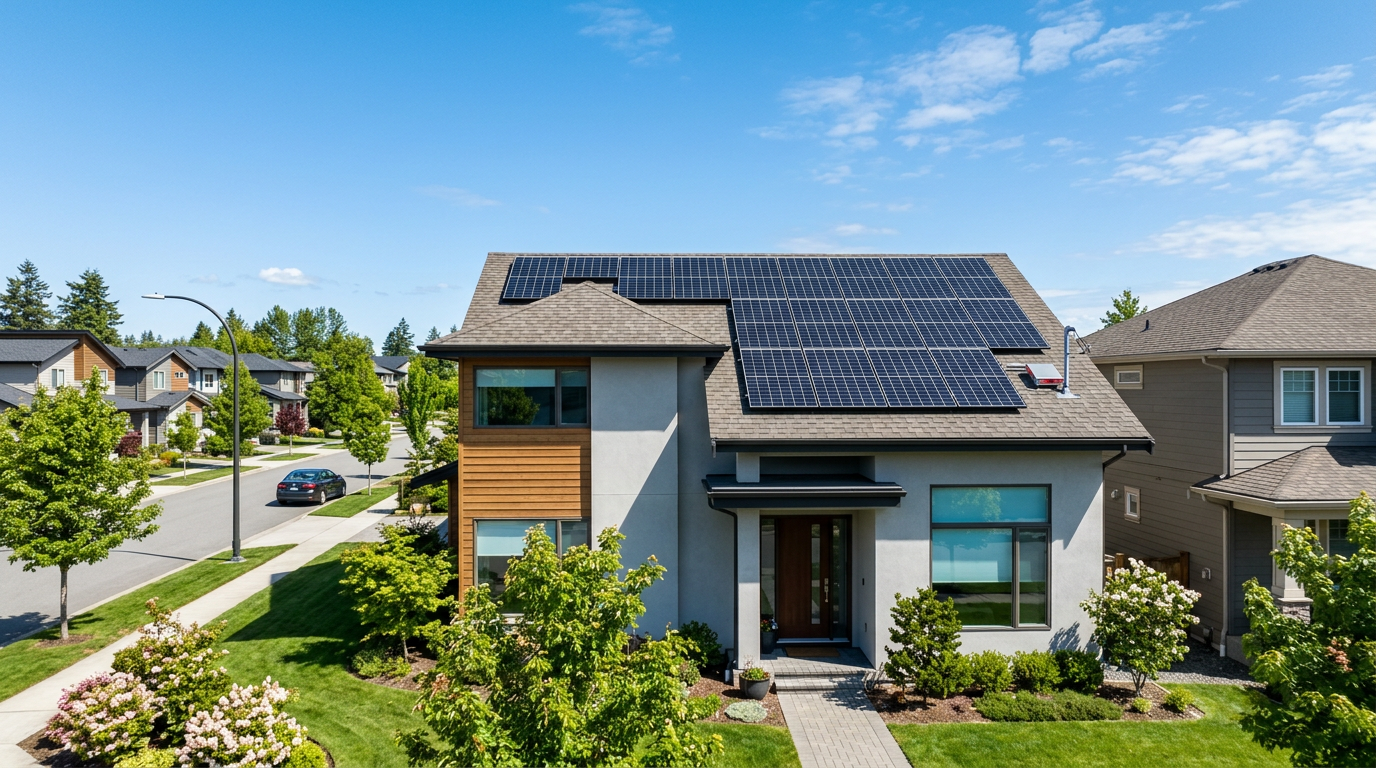
HOOK
Thinking solar means a $0 electric bill? Not always. Even with panels, many homeowners still pay something every month—and the reason usually isn’t a bad system.
[B-roll: rooftop solar panels, close-up of an electric bill, homeowner reviewing paperwork]
KEY POINT 1
First, solar only offsets the electricity your panels produce. If your home uses more power at night, in winter, or during heat waves, you can still pull energy from the grid.
[B-roll: AC running, lights on at night, winter home exterior]
KEY POINT 2
Second, your utility company may still charge basic fees. These can include customer charges, grid connection fees, or minimum bills that solar doesn’t eliminate.
[B-roll: utility bill zoom-in, clipboard, phone app with bill breakdown]
KEY POINT 3
Third, savings depend on your net metering rules. In some areas, extra power gets full credit. In others, it gets credited at a lower rate, which changes your payback.
[B-roll: animated bill credit graphic, map of utility territory, rooftop sun to grid arrows]
KEY POINT 4
Fourth, system size matters. A setup that’s too small won’t cover enough usage. Too big, and you may pay for panels you rarely need. The best match starts with your actual yearly usage.
[B-roll: installer measuring roof, energy usage chart, home owner looking at estimate]
CTA
Before you buy, ask for a proposal that shows your current bill, expected production, utility fees, and payback time. That’s the fastest way to know whether solar will truly save you money.
[B-roll: checklist on screen, solar proposal highlighted, end card with “compare before you buy”]
Free Tools & Calculators
Savings Growth Calculator
Project what regular deposits could grow to with compound interest.
Estimates only, for general information — not financial or medical advice.
Personal Loan Calculator
Estimate the monthly payment and interest on a personal loan.
Estimates only, for general information — not financial or medical advice.